Ontario Moves Toward Animal Testing Ban
Ontario is close to passing Bill 75, amending the Animals in Research Act to end the use of cats and dogs in invasive research procedures.
The amendment in Bill 75 came in response to the discovery of experiments on dogs taking place in London, Ontario.
This landmark legislation will place Ontario as a Canadian leader in protecting animals from being used in cruel research experiments, but there is still much work to be done.
While much research involving animals is reported to be relatively non-invasive, in 2023, the Canadian Council on Animal Care — Canada’s only national oversight for scientific activities involving animals — reported that more than 80,000 animals were subjected to procedures which cause severe pain near, at or above the pain tolerance threshold of unanesthetized conscious animals.
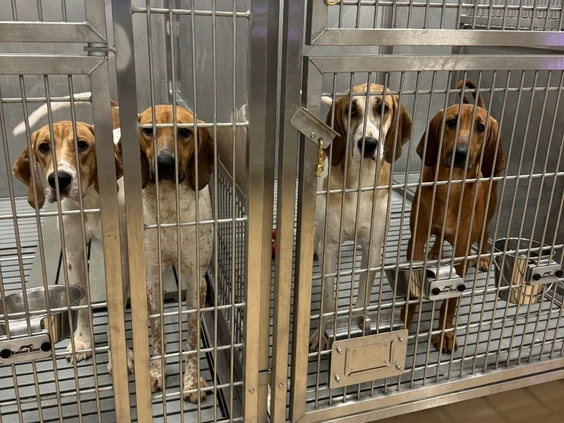
Ontario still permits invasive research practices for all other species and there is still opportunity for Ontario to be a leader in pioneering non-animal testing methods.
There is more to be done to protect all animals from invasive research practices, but this progress was only possible because you raised your voice for the animals who need you most.
Ontario is also poised to take a leap forward in protecting animals from unnecessary, cosmetic surgical procedures by banning ear cropping, declawing and devocalization of cats and dogs.
Thank you for standing up for the animals who need you most.
Canadian Leadership and Promises for Horses
This month, the Liberal party secured a majority government. As a result, there is opportunity to advance campaign promises for animal welfare that have been languishing, such as stronger protections for horses exported for slaughter.
In recent years, the federal government has turned greater attention to the plight of these horses, but progress has stalled while animal advocates have continued to push for change.
Legislation to either ban the practice outright or, at minimum, significantly strengthen regulatory oversight would be a step in the right direction. Specific protections could include enforceable limits on transport duration, stricter requirements for food, water, and rest during transit, and more rigorous inspection and reporting standards.

These regulations could resolve significant welfare issues such as container overcrowding, inadequate monitoring during international flights, and limited transparency in compliance data that have been widely criticized by advocates and veterinarians.
Polling shows strong support among Canadians for ending the practice. Your continued advocacy can create a better future for Canada’s horses. With a majority, the government holds greater legislative control, reducing reliance on opposition support and enabling it to move forward more decisively on animal welfare commitments that have previously stalled.
Write to your MP and share that Canada has not forgotten our promise to the horses.
Keeping Animals on the Ballot in Ottawa’s Municipal Election
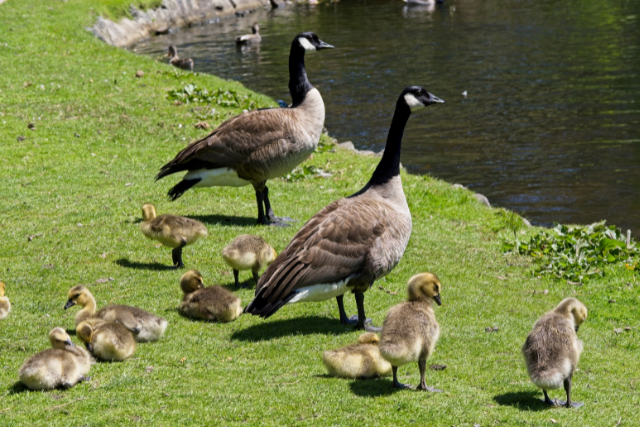
This October, Ottawa will head to the polls to elect the next city council. Keeping animals on the ballot is essential as Ottawa’s municipal government plays a critical role in the safety and welfare of the community’s animals.
Municipal elections are an opportunity to influence local priorities. Candidates are listening, and the questions you ask can help ensure animal welfare remains part of the conversation.
If you have the chance to meet candidates in your ward, consider asking how they plan to support animals in our community.
Questions You Can Ask Candidates
- Will city council consider a wildlife feeding policy that reduces unwanted human–wildlife encounters while supporting interactions that benefit local wildlife?
- Will the city invest in Trap-Neuter-Return (TNR) programs to help reduce the number of unowned cats and improve community safety and animal welfare?
- Will the city invest in more dog-friendly spaces to support positive dog socialization that benefits the community?
These are practical, evidence-based approaches that many municipalities are already exploring to better support their community’s animals.
In the coming election, you can help ensure that animals are on the ballot. By asking thoughtful questions and engaging with candidates, you will help build a more compassionate city for all.
Kittens Arriving at the OHS in Droves
As the weather warms, more kittens are arriving at the OHS in need of life-saving support.
The OHS has taken several measures to slow Ottawa’s cycle of homeless cats. This includes sterilization of all cats adopted from the OHS, cats in the care of the OHS’s rescue partners, feral cats under the care of a colony caretaker, and owned cats registered for one of the OHS’s community spay/neuter clinics.
Outdoors, cats face dangers from the environment, predators, disease, traffic and more. As a result of these dangers, outdoor cats live only two to five years on average, compared to their indoor counterparts, who often live well over 10 years, and sometimes beyond 20.
Kittens born outdoors are especially vulnerable and represent one of the greatest sources for animal suffering in Ottawa. When they arrive at the OHS, these tiny creatures spend at least eight weeks in the shelter, weaning off of their mother, socializing and preparing for their sterilization surgery.
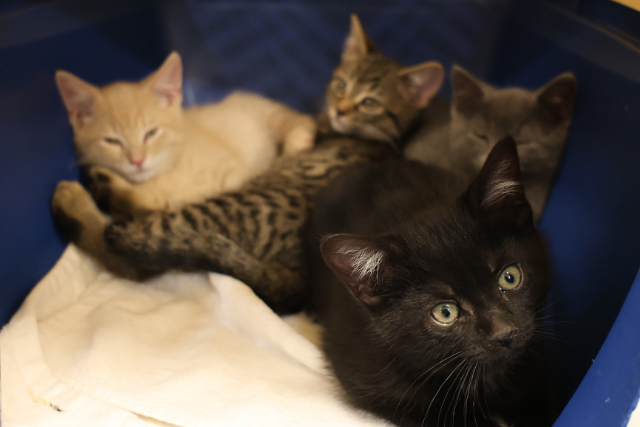
The OHS urgently needs more foster families to help care for these kittens and their mothers. You can sign up to join the foster program and support the cats in Ottawa who need you most.
Ottawa Humane Society Achieves Re-accreditation in Shelter Care
The OHS recently received re-accreditation from Humane Canada, demonstrating the OHS’s excellence in animal care and welfare. It remains one of only three humane societies across Canada to have achieved this prestigious goal.
Accreditation assesses all aspects of animal sheltering, including the facility and sanitation, medical and behavioural health, and adoption practices. Accreditation also covers programs in outreach, education and advocacy, to ensure the shelter provides the best services possible for its community.
Re-accreditation affirms the OHS’s commitment to building a more humane and compassionate community for all animals.
Your advocacy is an essential part of this commitment and ensures progress never stops in advancing animal welfare.
Thank you for making excellence possible for Ottawa’s animals.