Major Progress for Ontario’s Animals
Beginning in 2027, Ontario will ban invasive testing on cats and dogs, and unnecessary cosmetic procedures including declawing, devocalization and ear cropping.
This progress was only possible because of the compassion of animal advocates, like you, who demanded better protection for the animals.
These changes demonstrate that Ontario is willing to modernize animal welfare laws to align with current science, veterinary expertise and evolving public expectations.
The upcoming ban on ear cropping, declawing, and debarking acknowledges that procedures performed for appearance or convenience should not come at the expense of an animal's welfare.
These victories are worth celebrating, but now is not the time to stop fighting for animals.
The upcoming ban on cosmetic procedures has a critical gap in not banning unnecessary tail docking. Like ear cropping, tail docking permanently alters a dog's body. A dog's tail plays an important role in communication, balance, and movement. Yet puppies can still undergo this painful procedure — for appearance’s sake alone.

Ontario has a chance to build on this year's momentum by extending protections to include cosmetic tail docking — only your support can make this key protection possible.
You can sign the OHS’s petition to have this key protection included in the upcoming ban.
Progress in animal welfare is achieved through collaboration and evidence-based policy, and through communities that speak up for animals.
Ontario has taken important steps forward for animals, and with your continued commitment, even more animals will be protected in the years ahead.
Non-Profit Community Veterinary Clinic to Open in 2028
As the cost of living rises, pets are being separated from their loving families. A rising number of pet owners are surrendering their pet because of cost and housing concerns, representing 40% of the pets surrendered to the OHS last year.
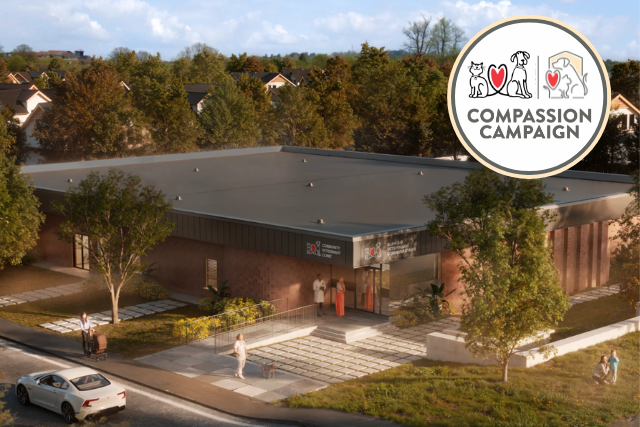
The OHS is calling for your help to build a Community Veterinary Clinic in Vanier dedicated to keeping more pets with the people who love them and to build a Behaviour Campus to expand the OHS’s behavioural supports for homeless animals.
Opening in early 2028, the OHS plans for the Community Veterinary Clinic to sterilize 3,500 pets each year and provide 1,200 wellness appointments. The clinic will also house the OHS’s Emergency Pet Food Bank and community outreach programs, making it a complete hub for animal welfare.
Most services will be available at low-cost for pets in Ottawa whose owners meet income qualifications. The clinic will also provide spay/neuter and microchip services for the general public to prevent pet homelessness and ensure brighter, healthier futures for Ottawa’s pets.
The OHS is also seeking the community’s support to build a new Behaviour Campus designed to help more vulnerable cats and dogs heal and thrive. These are cats and dogs who need time, and specialized care so they can have a second chance at a loving home. Over the last five years, the number of dogs requiring intensive behaviour support at the OHS has doubled.
The Community Veterinary Clinic and the Behaviour Campus will strengthen Ottawa’s safety net for animals — keeping pets with the families who love them and ensuring homeless animals get the care they deserve.
The OHS is calling on the community to help raise $15 million to make this next evolution in animal welfare possible. Every donation will help protect the bond between pets and people and create more second chances for animals with nowhere else to turn.
To learn more about the Compassion Campaign and make a donation, visit the OHS’s website.
Supporting Ottawa’s Feral Cats
It is kitten season and litters are arriving at the OHS in droves as more unsterilized cats breed outdoors. Kittens born outdoors are some of the greatest victims of Ottawa’s cycle of homeless cats — often living short, brutish lives.
The importance of spaying/neutering cats and keeping domestic cats indoors is essential in improving the welfare of Ottawa’s cats and preventing suffering for generations of kittens.
However, it’s not just domestic cats that contribute to Ottawa’s cycle of homeless cats. Feral cats occupy a difficult space in animal welfare as they have had little to no contact with humans and are unable to live in a traditional home environment. This limitation means feral cats have few options for sterilization, which is essential in preventing cat homelessness and humanely reducing the number of feral cats in the community.
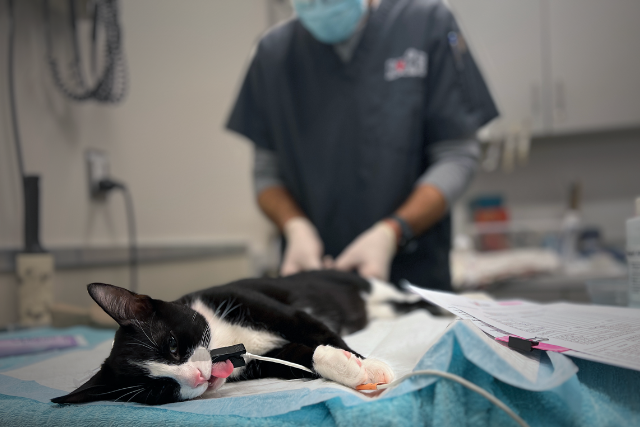
But your advocacy is making a brighter future possible for these cats. The OHS supports caretakers of feral cat colonies in Ottawa through free sterilization, microchips, vaccinations and parasite treatment for the colony’s cats.
Colony caretakers can apply for the program through the OHS website.
A Safety Net for Pocco
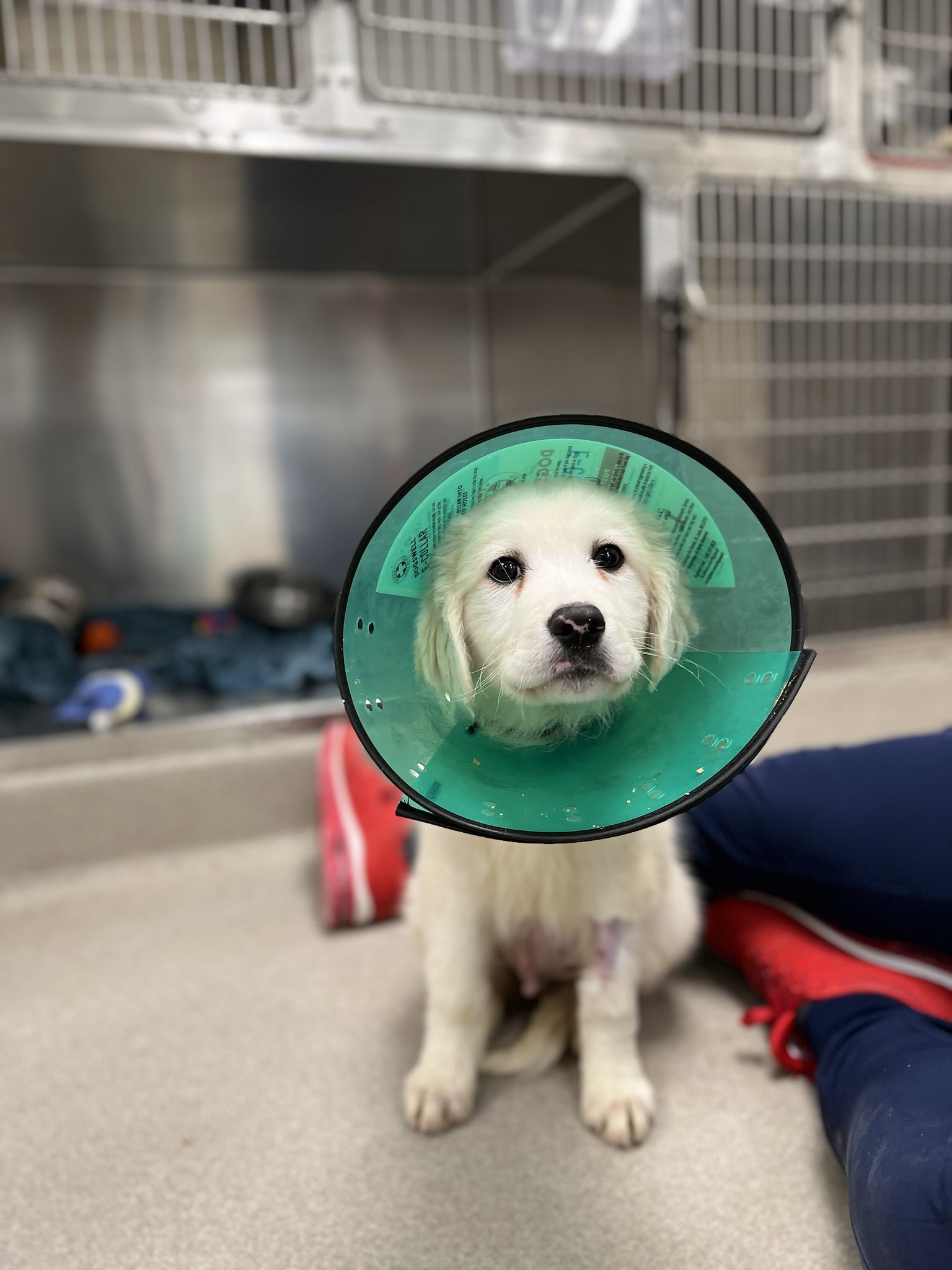
At three months old, Pocco was very sick. He was lethargic, vomiting and it was clear he needed help. Pocco’s owner could not afford the cost of his care and made the difficult decision to surrender him to the Ottawa Humane Society.
Pocco’s symptoms pointed to a problem with his gastrointestinal tract. OHS veterinarians performed an exploratory surgery to better understand his needs, and found that part of Pocco’s intestine had folded into itself, creating a serious blockage. OHS veterinarians removed the compromised section of intestine to save his life.
After surgery, he continued his recovery in a loving foster home, where he was finally able to rest and heal.
Today, Pocco is safe, healthy and thriving in a home of his own. Pocco’s story would not have been possible without your support Thank you for helping make life-saving care and second chances possible.